For the listener who sits with the music.
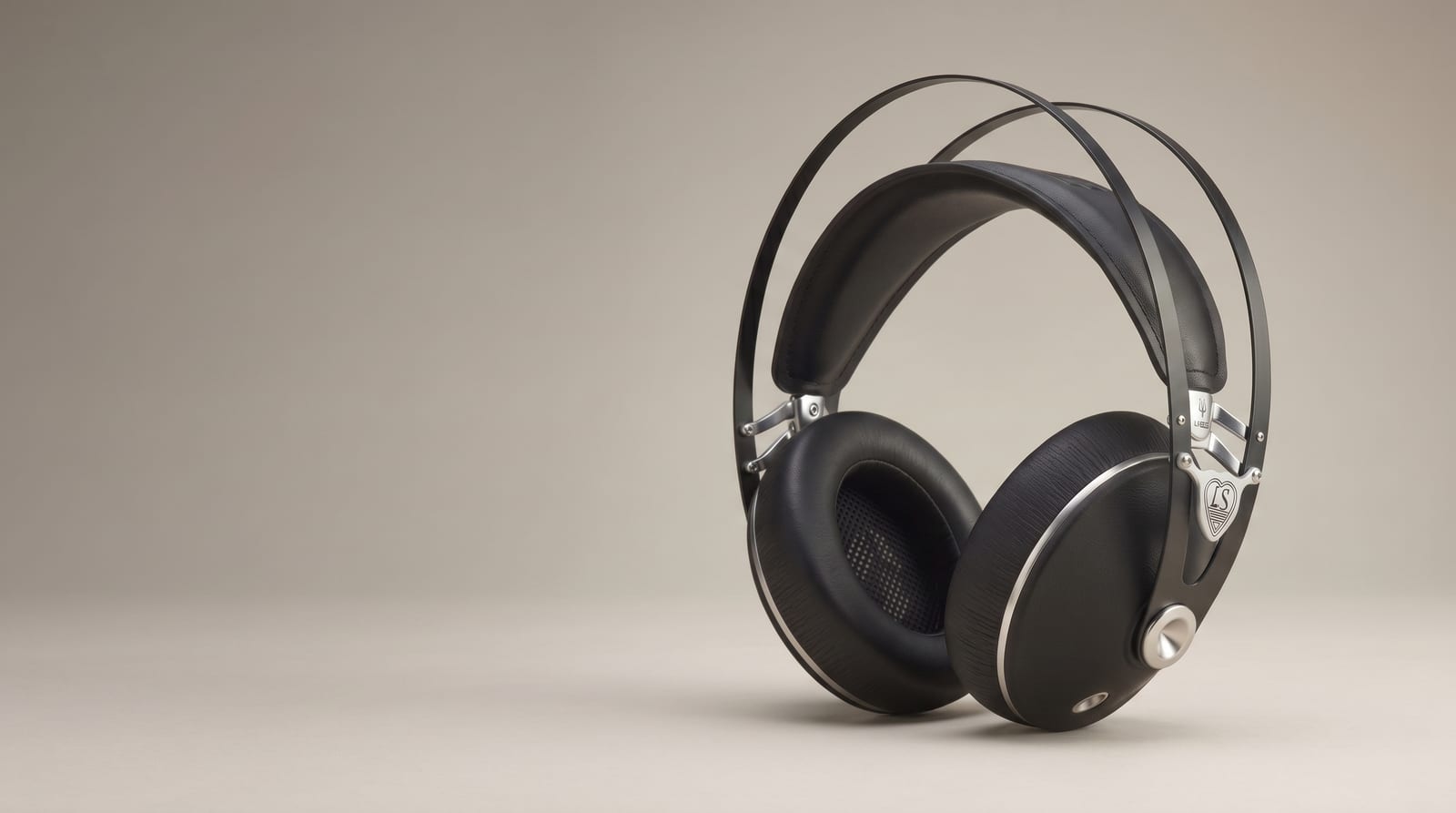
Built for hours, not minutes. The MEZE 99 Neo, modified to restore the second half of sound.
- Free and insured shipping, US & Canada
- Washington: sales tax added at checkout
-
Canada: duties & fees paid on delivery ›
Yes. Shipping to Canada is free. Canadian duties, GST/HST and any carrier handling fee are collected by the carrier on delivery and are the customer’s responsibility. Checkout may show your price in Canadian dollars. The 30-day listening trial applies; duties, GST/HST and carrier fees paid on import are not refunded by us.
- 1-year limited warranty · Read it ›

When listening becomes hours.
A record begins. You sit down. You mean to listen for forty minutes. Hours later, the room has changed shape and you have not moved.
Some headphones disappear from your head. Most of them tire you instead.
The reason recordings tire the body — and how the Journey changes that.
Every live sound does two things at once: it presses outward, and it draws you in. A speaker produces the first — sound pressure — but never the second. Your body keeps reaching to supply that missing half, and the effort of filling it in is what makes even excellent headphones quietly tiring over a long session.
- 01
Why long sessions tire you
Without that second half, the body keeps working to fill in what's missing. Long sessions turn subtly fatiguing, even with technically excellent headphones. The platform doesn't matter; the principle does.
- 02
Schalldruck — sound pressure
The outward push of sound through the air toward your ear. The one principle every single headphone produces — including the MEZE 99 Neo this Journey is built on.
- 03
Klangsog — sound-draw
The vitalizing half of natural sound — what you feel hearing birdsong or ocean waves, that leaves you strengthened, energized. A bodily sensation, not an emotional one. A real shared experience that is measurable. It's the half that no speaker or headphone can carry, until now.
- 04
The discovery
Cymatics — the science of how sound vibrations shape matter into visible form — goes back to Ernst Chladni in 1787 and was extended by Hans Jenny in the twentieth century. An artist and researcher named Atmani spent years inside that science, asking how the missing half could be restored where recorded sound has only the push.
- 05
The Lautsänger Technology
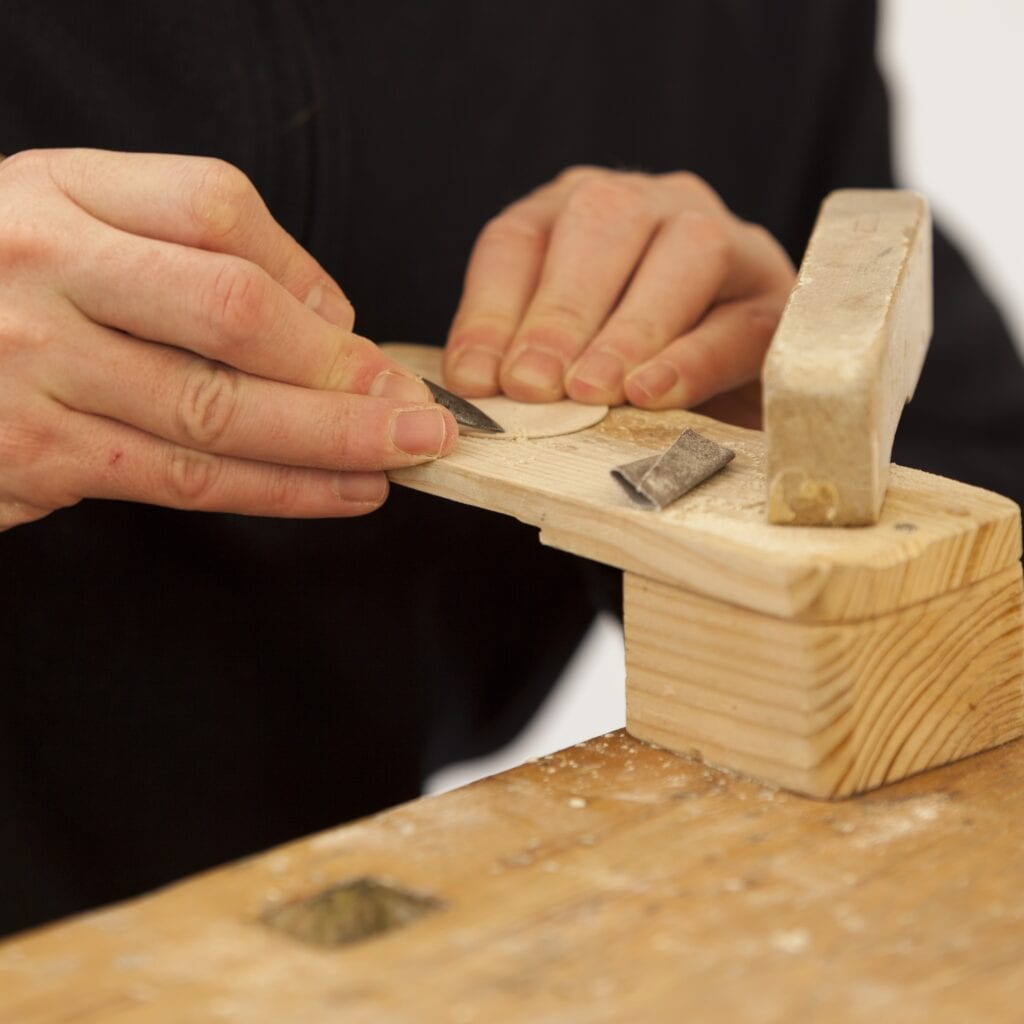
Atmani found that certain wooden forms, hand-positioned near each driver, let the missing half of living sound return — sounding components that complete what the speaker alone cannot. The technology is patented.
- 06
What it changes
The body relaxes into the music. The midrange opens. The bass becomes supportive instead of pushing. The highs sit naturally instead of forward. The hours stop weighing.

Like Dolby — different solution.

Dolby
Dolby did not build theaters or home stereos. Dolby developed a sound standard that other makers built into their equipment — transforming what it could deliver.

Lautsänger
Lautsänger does not build headphones. Lautsänger developed sounding forms — the Lautsänger Components — to restore the missing half of sound the speaker itself cannot deliver.
The product is the modification. Not the hardware. A developed solution to a hidden problem.
A MEZE 99 Neo, modified to restore the second half of sound.
The Journey starts as a MEZE 99 Neo — closed-back, ear-enclosing, medium-soft cushions, a self-adjusting headband that disappears as the hours go on. We open it. Lautsänger Components are installed near the drivers and the unit is resealed by hand at the Lautsänger manufactory in Hirschhorn am Neckar.
The MEZE 99 Neo platform was chosen for its durability, comfort, and acoustic integrity. Every component can be disassembled and serviced. The Journey is built to last for decades of listening.
- Wired only — no Bluetooth codec, no wireless compression.
- 1.5 m Kevlar-reinforced OFC cable with mic and remote.
- 6.3 mm gold-plated jack adapter included.
- Hard EVA carrying case, cable pouch, 3.5 mm gold-plated plug.
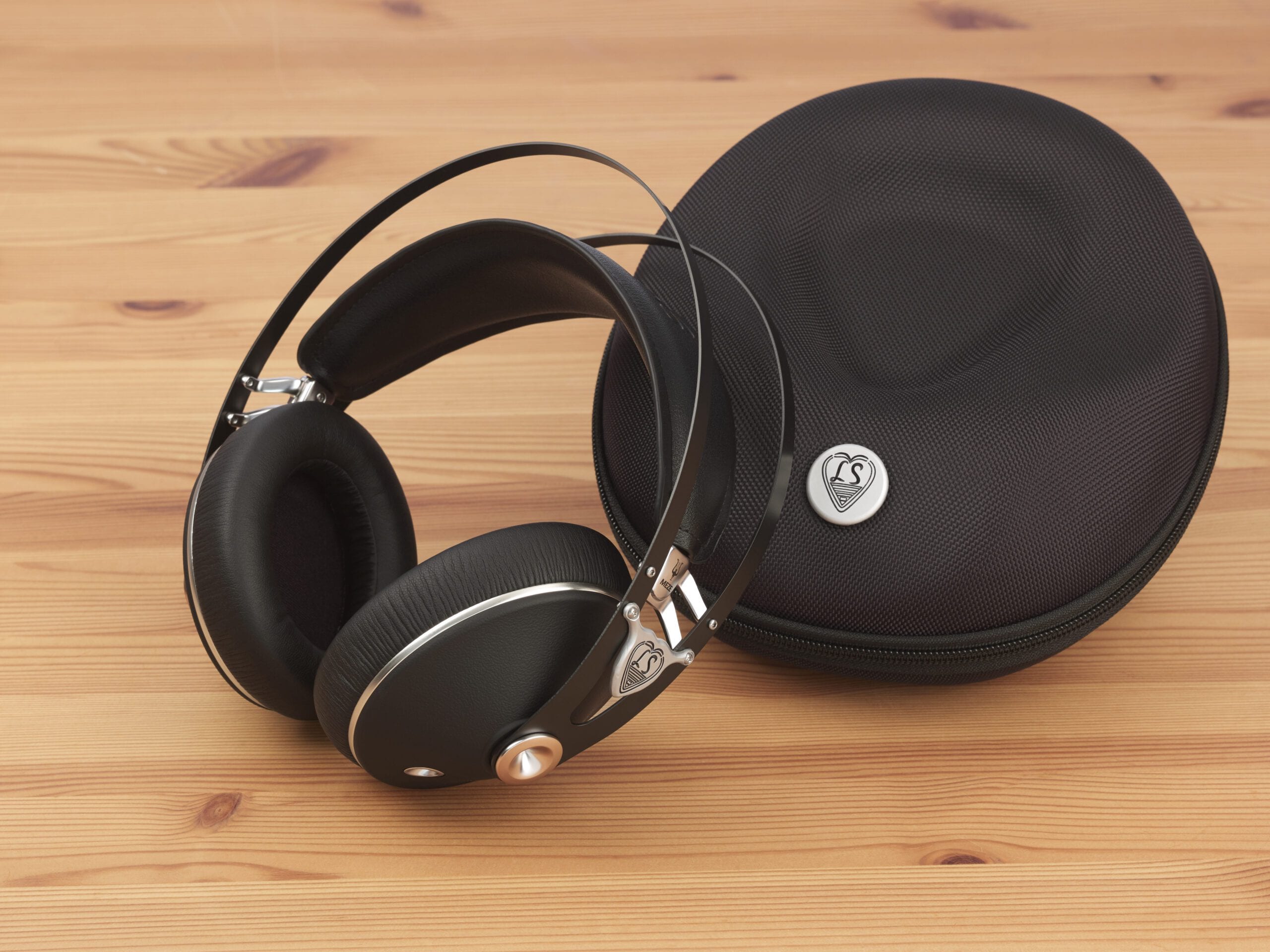
The modification is acoustic. Not electronic.
- Frequency response
- 15 Hz – 25 kHz
- Impedance
- 26 Ohms
- Sensitivity
- 103 dB · 1 kHz · 1 mW
- Weight
- 260 g
What listeners say. What the body shows.
-
A fantastic sounding headphone with great strengths in the warm midrange. The loudness leaves nothing to be desired — an absolute recommendation.
-
As if by itself, any distance between performer and listener seems to dissolve into a feeling of closeness.
In a 12-minute listening test, researchers recorded additional changes in circulation readings in the Lautsänger group only. (Exploratory study; see the full paper.)
The numbers
Acoustic
| Base platform | MEZE 99 Neo |
|---|---|
| Frequency response | 15 Hz – 25 kHz |
| Impedance | 26 Ohms |
| Sensitivity | 103 dB · 1 kHz · 1 mW |
| Nominal power | 30 mW |
| Maximum input power | 50 mW |
| Weight | 260 g |
| Modification | Lautsänger Components, hand-positioned |
In the box
| Cable | 1.5 m Kevlar-reinforced OFC, mic and remote |
|---|---|
| Adapter | 6.3 mm gold-plated jack |
| Plug | 3.5 mm gold-plated |
| Case | Hard EVA carrying case |
| Cable pouch | Included |
Tonalitá is the exclusive North American distributor of Lautsänger. Every modification is done by hand, one pair at a time, at the Lautsänger manufactory in Hirschhorn am Neckar, Germany.
What ships when you say yes.
- Free Insured Shipping
- Free Returns within 30 days
- Hard EVA case, cable, and 6.3 mm jack adapter — included
- 30-day money-back guarantee
Single transaction at $995. The trade-up program applies 100% of this toward the Challenge or Explorer within 12 months of purchase.

The 30-Day Listening Trial
Every Lautsänger ships with a 30-day listening trial. You are either hearing something you have never heard before — or you send it back. Full refund. One email.
Trade-up: 100% of the price paid, before tax, as credit toward the Challenge or Explorer within 12 months.
Common questions
Does Lautsänger build headphones?
No. Lautsänger doesn't build headphones — it completes them. It's a sound technology, applied by hand to the speakers of headphones that already exist. The closest comparison is Dolby: Dolby didn't make the stereos and televisions its name appears on. It created a sound standard that other manufacturers built into their equipment, transforming what it could deliver. Lautsänger does the same — but where Dolby worked on the electronics to deliver its signature signal, Lautsänger works on the speaker itself, fitting it with its cymatic components. The product is the modification, not the headphone.
What is this second half of sound?
Think of how you feel hearing birdsong, or ocean waves. You don't take that in through your emotions — it reaches you another way, one that leaves the body strengthened and quietly energized. Most people have felt it; few recognize it, and fewer still can name it. That is sound-draw. It isn't the opposite of sound pressure, and it isn't a pull — it's closer to the drawing-in of a breath: a vitalizing quality we all know by experience but rarely stop to register. And it is real — not a mood, but something that can be observed and even measured.
A living sound carries it; an audio recording from speakers or headphones never does — they only ever produce sound pressure, which is why even excellent gear can leave the listening subtly tiring. Klangsog isn't generated electronically — it's allowed to happen, by Lautsänger's patented wooden components fitted to the speaker, so the missing half returns and you hear and your body registers the whole of what was originally there.
How is this different from the MEZE 99 Neo I can buy direct?
Electronically and mechanically, it is the same MEZE 99 Neo — the same drivers, build, and cable MEZE ships. The decisive difference is in how the sound is experienced. Each pair is opened by hand at the Lautsänger manufactory in Hirschhorn am Neckar, Germany, fitted with Lautsänger Components, and carefully resealed. The modification lets the second half of sound — Klangsog, the sound-draw — return. Listeners describe the soundstage opening up: more space and depth around them, a sound that's easier to sink into, and a deeper sense of physical and mental relaxation. The headphone is available everywhere; the listening experience the Lautsänger Modification creates is available only through Lautsänger.
Why wired and not wireless?
Wired skips the entire wireless chain — no Bluetooth codec, no wireless compression, no battery in the signal path. For the listener who sits down with music, the wire is a feature. If you want wireless, the Lautsänger Challenge is the same modification on the Sonos Ace platform.
Will I hear the difference?
What you perceive will depend partly on how sensitively and attentively you listen. Many people first notice the difference as something they feel: the sound seems less demanding, more spacious, and physically more relaxing — the soundstage opens up around them. Experienced musicians, conductors, and trained listeners, however, often hear a very distinct difference — an unusual clarity, transparency, and separation of detail that lets them follow individual instruments and lines even within complex orchestral recordings. For some the difference is first felt; for others, especially those with highly developed listening skills, it is unmistakably heard. In many cases it is both. The 30-day trial exists for exactly this question — built so you can find out for yourself, with nothing riding on it.
Will long sessions tire me out?
The platform is chosen specifically for extended listening — medium-soft cushions, a self-adjusting headband, balanced weight. With Klangsog restored, the body relaxes into the recording instead of compensating for what is missing. Owners describe the change as the music feeling less effortful to receive.
Why this price?
The science behind the Lautsänger Technology goes back generations — from Chladni's first studies of sound made visible in 1787, through Hans Jenny's cymatics research, to Atmani's work turning it into a working acoustic modification. That result is protected by patent — which is why the Lautsänger Modification is something no other manufacturer can offer.
And every component is made by hand and fitted by hand. Each wooden Lautsänger Component is precisely placed and affixed to the speaker — in the exact position, found by listening, that lets Klangsog happen. The process demands precision and patience; it can't be automated.
You're not paying for the headphone — you can buy that anywhere. You're paying for the half of sound it cannot deliver on its own. And the 30-day trial means you're not paying on a promise: you decide whether it was worth it, after you've heard it.
How long is the cable?
1.5 m Kevlar-reinforced OFC with mic and remote. A 6.3 mm gold-plated jack adapter is included for amplifier and stereo use.
How does the 30-day trial work?
The trial runs for 30 days from the day your headphones arrive — enough time to live with them, not just demo them. If Lautsänger isn't for you, email us within those 30 days to start a return. We'll send a prepaid shipping label to print and affix to the package, and Tonalitá covers the return shipping; the one thing we ask is that the headphones come back in their original box. Return within the trial window and your refund is the full purchase price.
Does the Lautsänger Modification affect the warranty? What is covered if something goes wrong?
The modification is part of the warranty, not a gap in it. Lautsänger GmbH, the manufacturer, warrants the finished headphone as a whole, including its electronics and the Lautsänger Components, against defects in materials and workmanship under normal use for one (1) year from the date of delivery. At its choice, Lautsänger repairs or replaces the headphone free of charge, or refunds the purchase price if neither is reasonably possible. Ear pads and other wear parts, cosmetic damage, accidents, liquid, misuse, and repairs or modifications by anyone other than Lautsänger or its authorized service providers are not covered. To make a claim, email [email protected] with your serial number and order number; Tonalitá sends a return authorization (RMA) number and pays shipping both ways within the United States for covered claims. Warranty terms: tonalitah.com/warranty. Free copy on request: [email protected] or P.O. Box 251, Mountlake Terrace, WA 98043.
Where does it ship from, and how long does it take?
Every Lautsänger is made to order. The moment you purchase, your headphones are hand-fitted with Lautsänger Components at the manufactory in Hirschhorn am Neckar, Germany — they aren't pulled from a shelf, they're built for you. Once the work is done, the unit comes to Tonalitá and ships to you from within the US. On average, plan on about two weeks from order to delivery.
Do you ship to Canada?
Yes. Shipping to Canada is free. Canadian duties, GST/HST and any carrier handling fee are collected by the carrier on delivery and are the customer’s responsibility. Checkout may show your price in Canadian dollars. The 30-day listening trial applies; duties, GST/HST and carrier fees paid on import are not refunded by us.
Can I trade up later?
Yes. The trade-up program applies 100% of your purchase price, before tax, toward the Challenge or Explorer within 12 months. The Explorer is the natural step.
Begin your 30-day trial.
Start with a Journey. Made to order. About two weeks to delivery. The first listen is yours.